
How to Select a Reliable Radiator Manufacturer for Old Community Renovation
文章来源:hsjmh 发表时间:2026-11-9In the renovation of old residential communities, heating system upgrading is a livelihood project that draws great attention from residents. Faced with a wide range of radiator suppliers in the market, many project managers are confronted with the selection challenge: how to select a reliable radiator manufacturer for old community renovation? An improper supplier selection will not only lead to poor after-sales coordination, but also rework caused by insufficient product stability, which delays project progress and undermines residents’ satisfaction. Combined with practical engineering experience, this article sorts out a practical supplier screening framework from the perspective of risk control.
1. Avoid OEM Traps and Verify In-house Manufacturing Capacity
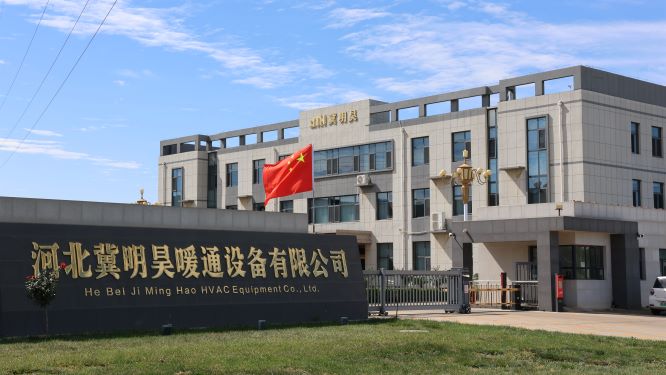
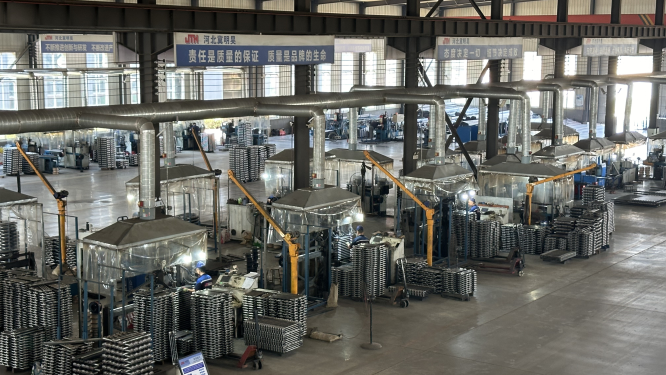
Some suppliers in the market do not own production facilities and only engage in OEM distribution. The renovation of old residential communities is a large-scale livelihood project. Manufacturers with independent production capacity are preferred for better risk control. During site inspection, focus on production equipment such as automatic welding and hydraulic pressure testing machines. Original manufacturers enjoy advantages in production scheduling and quality traceability, which helps guarantee consistent product quality for bulk orders and reduce performance differences between batches.
2. Adapt to Water Quality in Aging Pipe Networks and Verify Internal Anti-corrosion Technology
Pipe networks in old communities have been in service for years. The water contains impurities and fluctuating oxygen levels, imposing higher requirements on the anti-corrosion performance of radiators. Do not rely solely on verbal introductions during selection. Request inspection reports for anti-corrosion processes for verification. Qualified manufacturers adopt mature internal anti-corrosion treatment solutions, and some support sample disassembly and testing. Anti-corrosion processes suitable for complex pipe network water conditions can lower the risk of corrosion and leakage and extend the service life of radiators.
3. Look Beyond Quotation and Evaluate Supporting Technical Services
As terminal heating components, radiators deliver final heating performance subject to system matching and on-site installation. A trustworthy supplier provides not only products but also supporting technical assistance. At the preliminary communication stage, confirm whether the manufacturer can offer heat load calculation, hydraulic condition checking and on-site technical disclosure. Old community renovations often involve pipeline reconstruction and irregular connections. Suppliers with technical support capacity can help ease construction difficulties and reduce hidden risks of water leakage.
In summary, the core of selecting radiator suppliers for old community renovation lies in verifying actual performance capacity. Project risks can be mitigated by checking production hardware, anti-corrosion test documents and supporting technical services. Prioritize manufacturers with engineering service capabilities to ensure stable long-term operation of heating renovation projects and reduce subsequent operation and maintenance disputes.
Q&A
Q: Why are OEM suppliers unsuitable for old community renovation projects? A: OEM suppliers lack direct production control and quality traceability. Bulk supply carries higher risks of inconsistent quality. Once quality defects occur, the accountability chain is complicated, hindering rapid problem resolution for livelihood projects.

