
Understand the Cooling Coil in One Article: It Cools and Dehumidifies All-in-One
文章来源:hsjmh 发表时间:2026-10-28The cooling coil is a widely used heat exchange device in HVAC and waste gas treatment. Many people only know it can cool air, but are unaware of its dehumidification function. It is extensively applied in fresh air conditioning systems and pretreatment processes for VOC waste gas. Below is a comprehensive introduction covering its working principle, structure, selection, operation and maintenance.
Working Principle: Simultaneous Cooling and Dehumidification Chilled water flows inside the cooling coil. As hot and humid air passes through the finned tube bundle, heat transfers to the chilled water and the air temperature drops rapidly. Once the air temperature falls below its dew point, water vapor condenses into liquid water on the fin surface, which collects in the drain pan at the bottom and drains away. This is the core principle for integrated cooling and dehumidification. It also marks the main difference from ordinary finned tube radiators, which are mostly used for heating and generally do not perform dehumidification.
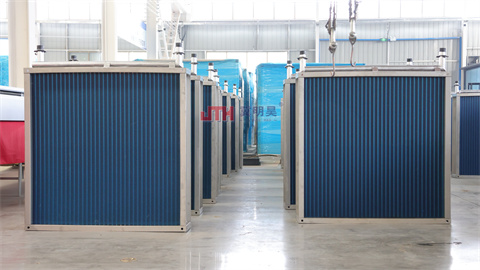
Common Materials and Structural Types Standard cooling coils for air conditioners adopt copper tubes with aluminum fins. They feature high heat transfer efficiency, light weight and moderate cost, suitable for clean fresh air and central air conditioning units. For waste gas and corrosive gas environments, 304 / 316 stainless steel tube bundles or epoxy anti-corrosion coatings are normally selected for acid and alkali resistance and protection against condensate corrosion. Fins are available as plain fins, corrugated fins and louvered fins. Louvered fins deliver the best heat transfer performance yet come with higher air resistance; plain fins have low resistance and are less prone to dust accumulation, ideal for dusty waste gas projects.
Key Selection Parameters — Heat Exchange Area Is Not the Only Factor Face velocity is the primary indicator. Excessively high velocity causes water carryover, while overly low velocity leads to bulky equipment. The next factor is the number of rows, commonly 2, 4, 6 and 8 rows. More rows provide higher heat transfer capacity along with greater air resistance. Hydraulic resistance, supply and return water temperature and air flow rate also need calculation. Water circuits can be reverse return or direct return. Reverse return is preferred for high-airflow units to ensure even water distribution and uniform heat exchange.
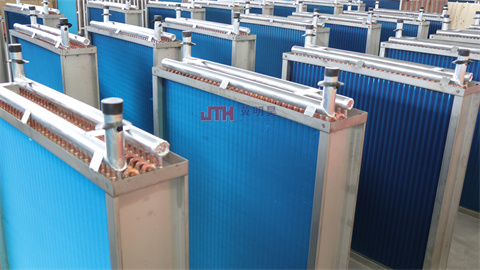
Condensate Drainage Design: A Common Pitfall Continuous condensate is generated during dehumidification. Insufficient drainage slope, blocked drain pipes or failed water seals will result in dripping and leakage, damaging the unit and downstream equipment. The drain pan shall be insulated to prevent external condensation, and a water seal shall be installed on the drain pipe to stop air backflow under negative pressure that traps condensate. For waste gas applications, pollutants in condensate should be considered and collected properly.
Routine Maintenance and Troubleshooting Fins tend to accumulate dust and contaminants. Blockage sharply reduces heat transfer efficiency, raises air resistance and increases fan load. Clean fins regularly with compressed air or low-pressure water to avoid fin collapse and deformation. Idle cooling coils in winter require anti-freezing measures, such as draining all internal water or using heat tracing to prevent copper tube cracking. If cooling and dehumidification performance deteriorates, first check for air binding, scaling or fin clogging.
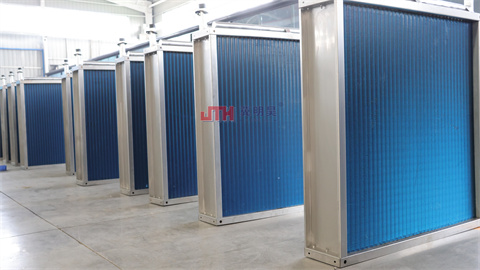
In summary, the cooling coil offers the unique function of cooling and dehumidification in one unit. Proper material selection, well-designed drainage and regular maintenance enable stable operation for fresh air conditioning and industrial waste gas cooling, ensuring reliable performance of the whole system.
Official Website: http://hebeisanreqi.com/
Service Hotline: 0318‑8636713
Mobile: +86 18832832688
Address: No.1126 Yongxing West Road, Jizhou District, Hengshui City, Hebei Province, P.R.China

